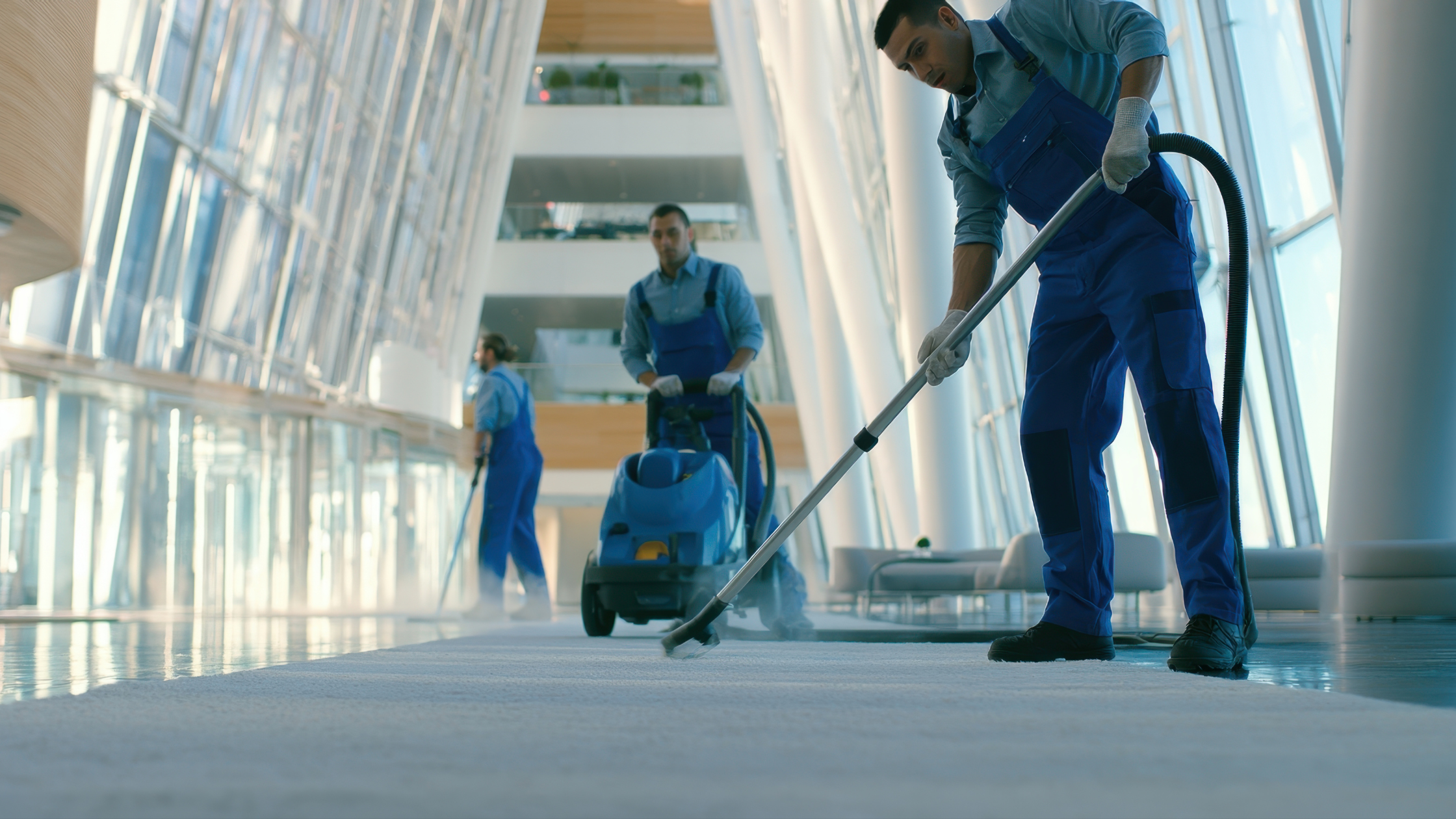
The first 90 days get everyone's attention
Starting a new janitorial contract creates urgency.
There's a transition plan to execute, employees to hire or retain, schedules to establish, equipment to put in place, and expectations to meet. Leadership is typically highly involved because everyone wants the new account to start successfully.
That's important. A strong transition matters.
But a successful launch doesn't necessarily tell you how a provider will perform once the account becomes part of everyday operations.
The real test begins when the excitement of implementation wears off.
That's when ordinary operational pressures show up: employees call out, positions become vacant, supervisors deal with competing priorities, equipment needs maintenance, and the facility itself changes.
Large facilities don't stay static. Production schedules change. School calendars change. events happen. Weather creates new demands. Building usage fluctuates.
A janitorial program has to be designed to handle that reality.
Staffing problems rarely stay staffing problems
One open position might not sound like a major issue.
In a 250,000+ square foot facility, however, that vacancy can create a chain reaction.
Someone else has to cover the work. Certain tasks get prioritized while others are delayed. Supervisors may step away from leadership responsibilities to fill coverage gaps. Overtime increases. Employees become stretched thinner.
Eventually, the customer notices.
Maybe it's an overflowing trash can. Maybe restrooms aren't being serviced consistently. Maybe a production area doesn't receive the attention it normally does.
The visible cleaning issue is often only the symptom.
The underlying problem is that the staffing model didn't have enough resilience built into it.
That's one reason workforce structure matters. At McLemore, our cleaning teams are W2 employees rather than subcontractors. They're supported by training, supervision, safety processes, and defined expectations.
The goal isn't simply to fill positions. It's to build a workforce capable of delivering consistent service over time.
Supervision is what keeps the scope from slowly slipping
A detailed scope of work is important, but a document can't manage a facility.
People do.
Dedicated on-site leadership creates daily accountability for whether the work is actually being completed.
A good on-site supervisor isn't waiting for the customer to identify problems. They're monitoring staffing, inspecting work, addressing performance issues, coordinating coverage, and making adjustments before small issues turn into customer complaints.
Without that layer of leadership, facilities teams often end up filling the gap themselves.
That's when you start hearing:
“Can you check on this?”
“Who is covering tonight?”
“Why was this area missed again?”
“Did anyone follow up on that issue from yesterday?”
At that point, you're no longer simply managing a vendor relationship. You're helping manage the vendor's operation.
And that's exactly what outsourcing was supposed to reduce.
What gets measured after the honeymoon period?
Another reason contracts decline is that early attention isn't replaced by a sustainable accountability system.
You shouldn't have to rely on whether someone happens to notice a problem during a walkthrough.
Digital inspections, defined KPIs, regular reporting, and business reviews create visibility into what's actually happening inside the facility.
That matters because the goal isn't perfection. In a large, complex operation, issues will happen.
The question is what happens next.
Was the issue identified quickly? Was there a process for correcting it? Is the same problem happening repeatedly? Is staffing contributing to it? Does the customer have visibility into what's being done?
Good accountability systems turn those questions into operational data rather than guesswork.
Low pricing can create problems later
Price matters. Every facilities leader has a budget to manage.
But the lowest number on an RFP isn't necessarily the lowest operating cost.
A janitorial contract has to support the labor, supervision, equipment, supplies, training, and management required to deliver the promised scope.
If the numbers don't support the operation, something eventually has to give.
That might mean positions stay open longer. Supervisor coverage gets stretched. Certain tasks receive less attention. Or additional costs begin appearing that weren't obvious when the contract was awarded.
A realistic price should reflect what it actually takes to perform the work consistently.
That's why McLemore uses fixed pricing based on the scope and labor requirements of the facility. The objective is simple: establish a model that can work on day 500, not just day 50.
The real question to ask a prospective janitorial partner
When evaluating a provider, it's easy to focus on what happens at launch.
How quickly can you start?
How many people will you bring in?
What equipment will you use?
Those are worthwhile questions. But facilities leaders should also ask what happens after the transition team leaves.
Ask how employee call-outs are covered.
Ask who is accountable on-site every day.
Ask how performance is measured.
Ask what happens when staffing drops below plan.
Ask how recurring deficiencies are identified and corrected.
Ask how often leadership reviews the account.
And ask how the proposed price supports the staffing and supervision being promised.
Those questions tell you much more about what month 18 will look like than a polished transition presentation ever will.
Consistency isn't created during the first 90 days
It's created in everything that happens afterward.
Reliable staffing. On-site leadership. Safety and training. Clear expectations. Measurable performance. Transparent communication.
Those systems aren't as exciting as a kickoff meeting, but they're what keep a large facility operating the way it should.
At McLemore, we've been serving complex facilities since 1970. Our approach is built around W2 employees, dedicated supervision, measurable performance, and a partnership designed for the long term.
Because the goal shouldn't be to find a janitorial company that impresses you for 90 days.
It should be to find a facility partner you don't have to babysit on day 91.
Is your current janitorial program built for the long term?
If service is starting to slip, staffing problems keep resurfacing, or your team is spending too much time managing your provider, it may be time to look at the systems behind the service.
Let's walk your site and talk about what better could look like.